
Restaurant financing covers kitchen equipment, payroll, refits and openings for food service businesses. Orchardmark Financial, a small-business funding broker in Scranton, Pennsylvania, explains equipment financing, working capital, credit lines and term loans to Lackawanna County's 538 food service employers and sends requests to lending partners, which decide and set every rate and term.
| Lackawanna County employers | 538 food service and drinking places (CBP 2023) |
|---|---|
| Restaurants and other eating places | 440, with 6,220 employees |
| Under five employees | 207 of 538 |
| Annual payroll | About $147.7 million |
| No-payroll food businesses | 291 (NES 2024) |
Food service in Lackawanna County, PA
Lackawanna County had 538 food service and drinking places with employees in 2023, employing 7,297 people with about $147.7 million in annual payroll; 207 had fewer than five employees. Restaurants and other eating places made up 440 of them, with 6,220 employees (U.S. Census Bureau, County Business Patterns 2023). Another 291 food service businesses, including 118 restaurants and eating places, operated with no paid employees in 2024 (U.S. Census Bureau, Nonemployer Statistics 2024).
That payroll works out to about $20,200 per food service employee, against about $49,300 across all Lackawanna County employers. Wages per head are low, but headcounts are high, so one slow week of sales reaches payroll quickly.
Restaurant working capital
Restaurants carry little inventory and get paid quickly at the register, so the gaps they face come from timing and surprises: a slow stretch, a catering client paying on 30-day terms, a payroll that lands before a weekend's sales. Short-term working capital covers a gap with a clear end. A gap that never closes points to pricing or costs, not funding. Payroll timing in particular is covered in our article on restaurant payroll.
A restaurant line of credit
A credit line suits recurring but uneven costs: produce orders that vary week to week, a repair bill, a holiday staffing push. Draw what is needed and repay from sales. Partners reviewing restaurants watch daily deposits closely, and a line drawn to its limit for months at a time suggests a structural problem rather than a timing gap.
Financing a walk-in cooler and other kitchen equipment
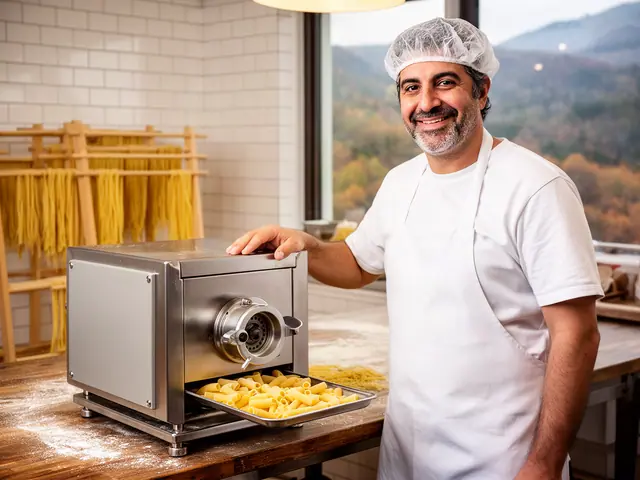
Walk-in coolers, ranges, fryers, combi ovens, hood systems and dish machines are usually financed through equipment financing, with the equipment as collateral. Used kitchen equipment is common, but its resale value falls quickly, so partners may shorten the term or ask for more down. Installation costs, such as electrical work or ventilation, are sometimes harder to include than the unit itself; ask before you sign the quote.
POS system financing
Point-of-sale hardware can be financed or leased like other equipment, but software subscriptions and payment-processing contracts are separate agreements. Read the processing contract on its own terms, including its length and any early termination charge. If a merchant cash advance is offered alongside a processor, remember that an advance is not a loan and collects from your card sales until an agreed total is remitted.
How to fund a new restaurant: three cost buckets
Opening costs usually split three ways: the build-out of the space, the kitchen equipment, and cash to operate until sales cover costs. Partners treat a first restaurant cautiously because there are no sales to review. Expect questions about the owner's industry experience, personal credit, the cash being invested, the lease and a realistic budget. Equipment financing is often easier to obtain for a new opening than unsecured working capital, because the equipment secures the balance.
Refits and second locations
A dining room refit, a patio or a second location is a one-time cost that earns over years, which usually suits a term loan rather than short-term money. Partners look for a track record at the first location and a clear budget for the second.
Records partners request from restaurants
- Three to six months of business bank statements, showing daily deposits.
- Point-of-sale or merchant processing statements.
- The lease, including its remaining term and any personal guarantee.
- Business and personal tax returns.
- Quotes for any equipment or work being financed.
The lease matters more than owners expect. A partner financing a ten-year asset in a space with two years left on the lease will ask what happens at renewal.
Before signing for kitchen equipment
- Ask for every payment plus any buyout, totaled in dollars.
- Confirm who owns the equipment during the term.
- Check what happens if the restaurant closes or moves.
- Ask whether installation and delivery are included.
- Read the insurance requirements.
Other sectors are on the industry pages, and the county's employer profile is on the city page.
By Orchardmark Financial · Updated